


What Is Maximalism? How to Master This Bold Design Trend with Wall Art & Wallpaper
Interior maximalism follows the philosophy of “more-is-more.” But great maximalist rooms aren’t hectic or overwhelming. Curated maximalism is richly layered with color, pattern, texture, and personality. Textures and colors tell a story in a space that feels intentional. Editing is still key—but instead of minimizing your décor, you maximize impact with well-edited layers.
If minimalism is whispering, maximalism is singing at the top of its lungs. And wallpaper is one of the easiest places to start because it offers an instant base for making bold moves. In this guide, we’ll show you how to achieve maximalist style by adding statement wallpaper, making a bold art wall, and learning the designer tricks that keep your space exciting and harmonious.
The Maximalism Sweet Spot: “Bold” vs. “Busy”
Before we talk product picks, it helps to define what maximalism isn’t:
-
Not clutter (every surface covered with stuff)
-
Not chaos (patterns fighting for attention)
-
Not “everything matches” (that’s themed, not layered)
Maximalism is:
-
Repetition of a few key colors across many surfaces
-
Pattern mixing with varied scale (large + medium + small)
-
Texture layering (velvet + wood + brass + woven + glossy)
-
Personal collections and artwork that look intentionally placed
A great maximalist room has one clear hero, a supporting cast, and a few quiet moments so the eye can rest.
The 6 Rules That Make Maximalism Look Expensive
1) Start with one “anchor” decision
Pick your anchor first, wallpaper or a major art piece, then build outward. Wallpaper is often the easiest anchor because it sets the mood immediately.
2) Choose a tight color story (then repeat it)
Maximalism looks cohesive when you repeat the same colors in different ways:
-
Wallpaper background color → sofa tone
-
Wallpaper accent color → throw pillow or art
-
Metallic hint in wallpaper → lighting finish
3) Mix patterns by scale, not by fear
A reliable pattern stack:
-
Large: wallpaper (or rug)
-
Medium: rug (or drapery)
-
Small: pillows, lampshades, throws
4) Repeat one shape
If your wallpaper features arcs or feathers, repeat that “shape language” with:
-
Round mirrors
-
Curved lamps
-
Arched frames
-
Scalloped textiles
5) Layer texture like it’s your job
Velvet, linen, lacquer, carved wood, woven baskets, aged brass—texture is what keeps bold rooms from looking flat.
6) Leave 10–20% “negative space”
This is the secret. Even maximalist rooms need breathing room—an empty wall section, a calm ceiling, or a quiet piece of furniture.
Maximalist Wallpaper Picks from Wall Artifacts
Below are 5 wallpaper options from Wall Artifacts that naturally support maximalist design because they’re rich in detail, color, narrative, or pattern.
1) Moody Botanical Glam
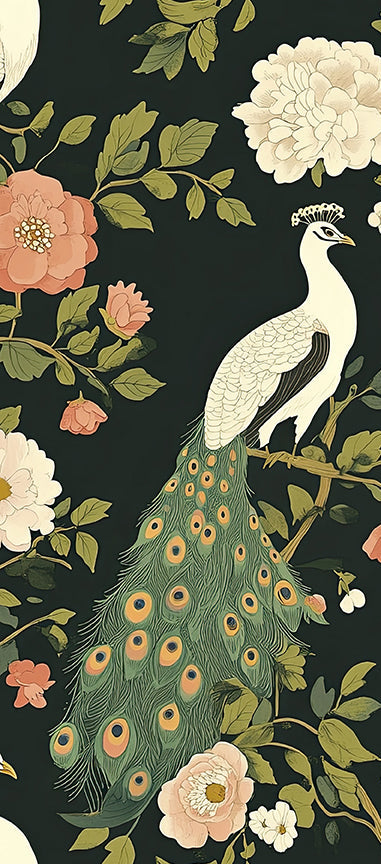
Mystical Garden Elegance Wallpaper
A peacock-and-floral moment that practically demands velvet, brass, and layered art. Use it for a statement wall behind a sofa or bed.
Style it with: emerald velvet pillows, antique gold frames, dark wood, warm lighting.
2) High-Contrast Floral Drama
Wild Poppy Passion Wallpaper
Red + black florals are maximalism made easy. This is your “confidence wallpaper”—it does the heavy lifting.
Style it with: striped pillows, lacquered black side tables, sculptural lighting.
3) Color-Forward Botanical Punch
Botanical Breeze Wallpaper
Coral blooms and lush greenery create an upbeat maximalist backdrop that still feels fresh.
Style it with: linen drapes, warm wood, patterned rugs with coral accents.
4) Chinoiserie-Inspired Collector’s Wall
Chinoiserie Sky Garden Wallpaper
Maximalism doesn’t have to be loud. This toile-style chinoiserie look is ideal for “elegant maximalism”—layered, storied, and refined.
Style it with: blue-and-white ceramics, brass frames, traditional silhouettes + modern lighting.
5) Dark Romantic Baroque
Timeless Baroque Wallpaper
If you want a room that feels like a boutique hotel library, this is it. Deep, ornate, and instantly atmospheric.
Style it with: oil-rubbed bronze, mohair throws, vintage rugs, dramatic art lighting.
How to Layer Wall Art Over Wallpaper (Without Visual Chaos)
The fear is real: “If my wallpaper is bold, can I still hang art?”
Yes—and it’s one of the most designer maximalist moves you can make. Use these guidelines:
Pick one of these 3 approaches
1) Gallery wall with consistent frames
Use the same finish (all black, all brass, all white oak). Wallpaper becomes the texture; frames become the structure.
2) Oversized art as a “pause”
One large piece creates a clean focal point. Keep the mat generous so the art doesn’t compete with the wallpaper.
3) Layered leaning art
On a console or mantle: stack frames, add a mirror, then add sculptural objects. This is maximalism’s “collected” look.
Proportion rules that keep it chic
-
Choose art that covers ~60–75% of the furniture width beneath it (sofa/console/bed).
-
Use mats to create negative space (especially with busy wallpaper).
-
Add a picture light or sconce lighting—maximalism loves glow.
Room-by-Room: Maximalism That Actually Works
Living Room: The “Collected Gallery” Look
-
Anchor wallpaper behind the sofa
-
Add a layered rug (Persian-style works beautifully).
-
Mix pillows: one stripe, one velvet solid, one small floral.
-
Finish with a gallery wall in consistent frames.
Dining Room: Drama + Shine
-
Create instant evening glamour.
-
Add a chandelier on a dimmer.
-
Go for velvet or linen drapes (depending on season and vibe).
-
Bring in reflective surfaces: mirror, bar cart, glossy ceramics.
Bedroom: Maximalist, but Restful
-
Choose a print that has detail but a coherent palette.
-
Keep bedding mostly solid, then add 2–3 patterned pillows.
-
Add a vintage rug and a sculptural lamp to keep the room layered.
Powder Room: The Best Place to Go “Full Max”
-
Pair with a bold mirror (oval or sunburst).
-
Choose one metal finish and repeat it (faucet + mirror frame + sconce).
-
Add art—even tiny framed prints look incredible against strong wallpaper.
Entryway: The Bold Hello
-
Set a “grand home” tone instantly.
-
Add a large mirror, a patterned runner, and one sculptural catchall bowl.
-
Don’t overcrowd surfaces—entryways need function.
Maximalism Checklist
-
One anchor wallpaper (or anchor artwork)
-
3 main colors (repeat them)
-
3 pattern scales (large/medium/small)
-
3 textures (soft/hard/shiny)
-
1 “quiet zone” (negative space)
-
Warm, layered lighting (dimmers if possible)
FAQ: Maximalist Design with Wallpaper
Can maximalism work in a small room?
Absolutely. In fact, small rooms (powder rooms, hallways) are perfect for maximalism because the impact is high and the commitment is contained.
How do I keep maximalism from looking cluttered?
Edit surfaces, not walls. Keep tabletops functional, use trays, and repeat a tight color palette so the room feels curated—not chaotic.
If my wallpaper is busy, should I skip art?
No—just simplify the art presentation: consistent frames, generous mats, or one oversized piece.
What’s the easiest way to “try” maximalism without redoing everything?
Start with one statement wall (or a powder room), then layer in bold textiles—pillows, rugs, and curtains in your wallpaper’s accent colors.
Do maximalist rooms have to be bright?
Not at all. Dark maximalism is a huge look—think jewel tones, moody florals, baroque detail, and warm lighting.
Final Thought: Maximalism Is Personal Style, Turned Up
Maximalism isn’t about buying more. It’s about making space for what you love—color, pattern, collected art, layered textiles, and rooms that feel alive. Start with a wallpaper that sparks a reaction, then build a story around it.